


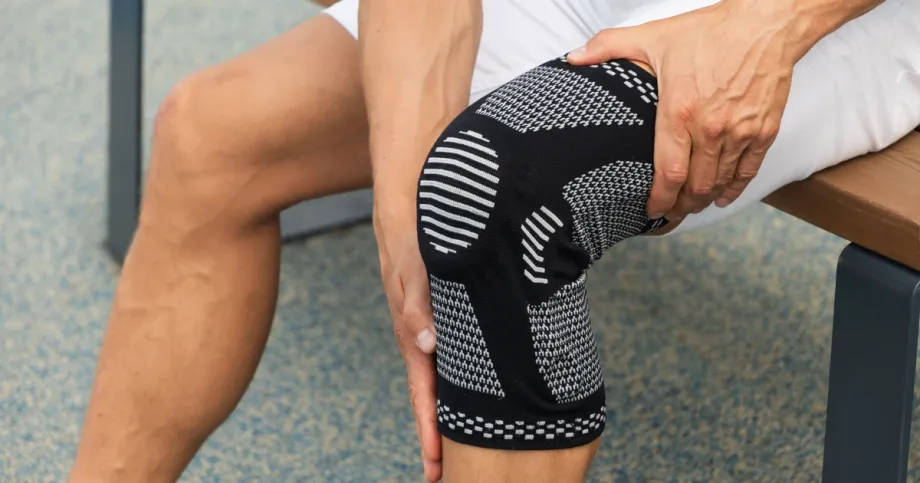
Finishing a marathon is a major accomplishment, but the recovery period matters just as much as the training that got you to the starting line. After 26.2 miles, it is common to experience muscle soreness, stiffness, fatigue, and temporary joint discomfort.
For those taking on the Charlotte Marathon this November, it is important to remember that crossing the finish line does not mean your body is ready to jump right back into your usual running routine. Giving your muscles and joints time to recover, easing back into activity, and paying attention to lingering pain can help you return to running while reducing the risk of a small problem becoming a longer-term knee or hip issue.
Why Do Your Knees or Hips Hurt After a Marathon?
Long-distance running puts repetitive stress on the muscles, tendons, and joints of the lower body. Over 26.2 miles, that adds up. Fatigue can also change your running form, which may affect how force is distributed through your knees, hips, and other parts of your body.
Post-marathon knee or hip pain may be related to:
- Muscle fatigue and soreness
- Repetitive impact from running
- Overuse
- Changes in running mechanics as you become fatigued
- Existing muscle weakness or imbalance
- Increasing mileage or intensity too quickly after the race
Some soreness after a marathon is expected. Pain that persists, worsens, or changes the way you walk or run deserves more attention.
How Long Should You Rest After a Marathon?
There is no single recovery timeline that works for every runner. Your return to running should depend on how your body feels, your training history, and whether you are experiencing pain.
In the first several days, prioritize recovery rather than immediately returning to your normal mileage. Gentle walking and comfortable mobility can help you stay active without immediately returning to the repetitive impact of running.
Adequate sleep, hydration, and balanced nutrition can also support your body's recovery after a long endurance event.
Most importantly, do not treat the first day you feel better as a reason to jump straight back into hard workouts.
When Can You Start Running Again After a Marathon?
It can be tempting to lace up as soon as your legs start feeling normal again, especially if you have another race on the calendar. A gradual return to running is generally a better approach than immediately resuming your pre-marathon training schedule.
Before increasing your mileage, consider whether you can:
- Walk comfortably without limping
- Use stairs without significant pain
- Move your hip and knee comfortably
- Complete basic strength or mobility exercises without increasing symptoms
- Run easily without changing your stride because of pain
Start with easier activity and increase gradually. Pay attention not only to how your knee or hip feels while running, but also how it feels later that day and the following day.
If pain repeatedly returns when you increase your running, that pattern is worth addressing.
How Can Strength Training Help Prevent Running Injuries?
Running is only one part of a strong training program. Strengthening the muscles that support your hips, knees, and lower body can help you maintain control and stability as you run.
A runner's strength program may include exercises for the:
- Glutes and hip muscles
- Quadriceps
- Hamstrings
- Calves
- Core
Strength training can also help address weaknesses that may contribute to changes in running mechanics.
After a marathon, though, recovery is not the time to turn your strength routine into another intense training block. Ease back into strength work and adjust exercises if they increase your symptoms.
What Is the Difference Between Normal Soreness and an Injury?
One of the biggest questions after a marathon is whether a painful knee or hip simply needs more recovery time.
Typical post-race soreness should gradually improve as your body recovers. An injury may be more concerning when pain persists, gets worse with activity, or affects normal movement.
Consider having your symptoms evaluated if you experience:
- Knee or hip pain that is not improving
- Pain that gets worse when you return to running
- Significant swelling
- A feeling that the knee is unstable or giving way
- Catching or locking
- A limp or noticeable change in your running stride
- Pain that keeps returning each time you run
- Symptoms that continue for several weeks
You do not necessarily need to stop all activity because of an ache. But consistently running through pain that changes your movement can make recovery more difficult.
Why Does Running Form Matter After a Marathon?
Fatigue can change running mechanics, particularly during the later miles of a long race. If soreness continues after the marathon, you may also unconsciously change your stride to protect a painful area.
That compensation can put additional stress on other muscles or joints.
If you notice that you are limping, shortening your stride, avoiding one side, or otherwise running differently because of pain, consider taking a break from running and having your symptoms evaluated.
A sports medicine specialist or physical therapist can assess your movement, strength, flexibility, and other factors that may be contributing to your symptoms.
What Should You Do About Persistent Knee or Hip Pain After a Marathon?
If knee or hip pain continues after the Charlotte Marathon, the next step is not necessarily to stop running permanently. The goal is to understand what is causing the pain and determine how to safely return to activity.
An orthopedic or sports medicine evaluation may help identify whether symptoms are related to an overuse injury, muscle or tendon problem, joint condition, or another source.
Depending on the cause, treatment may include activity modification, targeted strengthening, mobility work, or other nonsurgical treatments. Some runners may need additional evaluation or treatment based on their symptoms.
Getting help early can also make it easier to address a problem before it becomes a recurring issue during your next training cycle.

How Can You Protect Your Knees and Hips During Your Next Training Cycle?
Once you are fully recovered, use the post-marathon period to think about what worked and what did not during your training.
For your next race, consider:
- Increasing mileage gradually
- Building rest and recovery days into your training
- Maintaining lower-body strength
- Addressing recurring aches early
- Avoiding sudden increases in mileage or intensity
- Adding lower-impact activities when appropriate
- Paying attention to changes in your running mechanics
Recovery is not lost training time. It is part of training.
Post-Marathon Knee and Hip Care at OrthoCarolina
Even when your marathon is over, your recovery will still be underway.
If knee or hip pain is lingering after a Marathon or keeps returning when you resume running, OrthoCarolina's orthopedic and sports medicine specialists can help evaluate your symptoms and discuss treatment options.
Book an appointment online with OrthoCarolina in just a few clicks and get back to running.
Frequently Asked Questions
How long does knee pain last after a marathon?
Mild soreness or stiffness can occur after a marathon and should generally improve as your body recovers. Persistent, worsening, or activity-limiting knee pain should be evaluated rather than repeatedly pushed through.
Is hip pain normal after running a marathon?
Some temporary soreness can occur after long-distance running. Hip pain that persists, worsens when you return to running, causes a change in your gait, or repeatedly returns with activity may indicate an issue that needs evaluation.
When should I see a doctor for post-marathon knee or hip pain?
Consider seeing an orthopedic or sports medicine specialist if your pain is not improving, keeps returning when you run, affects your walking or running form, or is accompanied by swelling, instability, catching, or locking.
Back