


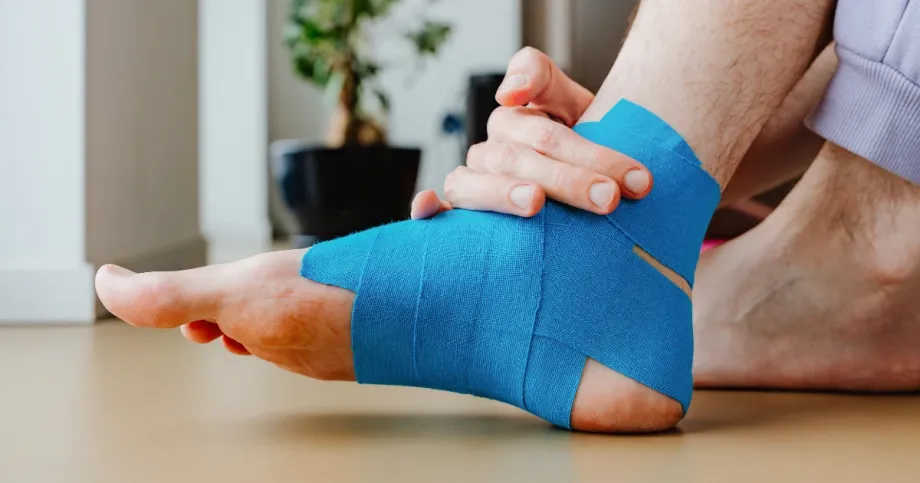
Ankle injuries are some of the most common injuries among athletes and active individuals. A sudden change in direction, awkward landing, or uneven surface can put stress on the ankle ligaments and lead to a sprain.
Ankle taping is one way athletes and trainers use additional support during activity. When applied correctly, athletic tape can help limit excessive side-to-side movement, provide stability, and support the ankle during sports or recovery.
However, ankle taping is not a replacement for proper injury evaluation or treatment. If you are experiencing ongoing ankle pain, repeated sprains, swelling, or instability, an orthopedic specialist can help identify the cause and recommend the right approach for your recovery.
At OrthoCarolina, sports medicine specialists work with athletes of all levels to diagnose ankle injuries, create personalized treatment plans, and help patients safely return to the activities they enjoy.
Why Do People Tape Their Ankles?
The ankle is designed to provide stability while allowing a wide range of motion. During sports and physical activity, the joint is placed under repeated stress from running, jumping, cutting, and sudden changes in direction.
Ankle taping can provide additional support by helping:
- Limit excessive ankle movement that may contribute to sprains
- Provide stability during athletic activities
- Support previously injured areas during recovery
- Reduce feelings of instability during movement
Taping is commonly used in sports such as basketball, soccer, football, volleyball, and other activities that involve frequent jumping or quick changes in direction.
While tape may help provide external support, building strength, improving balance, and addressing underlying movement issues are also important parts of preventing future injuries.
When Should You Consider Ankle Support?
Not everyone needs to tape their ankle before activity. Whether ankle support is appropriate depends on your injury history, sport, activity level, and overall ankle stability.
Common reasons someone may use ankle taping include:
Injury Prevention
Athletes with a history of ankle sprains may use taping before activities that place extra stress on the ankle. Added support can help reduce excessive movement during sports.
Support After an Ankle Sprain
After an ankle injury, taping may provide temporary stability while the ankle continues to heal and regain strength.
Returning to Activity After Injury
Some athletes use ankle taping as part of their return-to-play process. A healthcare provider or athletic trainer can help determine when it is safe to increase activity.
Improving Confidence During Movement
After an injury, some individuals experience a feeling of instability or hesitation. Additional support may help athletes feel more comfortable while rebuilding strength and mobility.
How Does Ankle Taping Help Prevent Injuries?
Ankle taping works by providing external support around the joint. The tape helps limit excessive inversion and eversion, which are movements where the ankle rolls too far inward or outward.
Most ankle sprains occur when the ankle rolls outward or downward, stretching or tearing the ligaments on the outside of the ankle. Providing additional support around these areas may help reduce stress during activity.
However, taping works best when combined with other injury prevention strategies, including:
- Strengthening the muscles around the ankle and lower leg
- Improving balance and coordination
- Wearing appropriate footwear
- Gradually increasing activity levels
- Addressing previous injuries before returning to sports
How to Tape an Ankle: Step-by-Step Guide
Learning proper ankle taping techniques can help athletes, coaches, and active individuals better understand how ankle support works.
Proper taping technique depends on the type of injury, the level of support needed, and individual circumstances. If you have ongoing ankle pain, repeated sprains, or difficulty returning to activity, consult an orthopedic specialist for guidance.
Step 1: Prepare the Ankle
Before applying tape:
- Make sure the ankle is clean and dry
- Position the foot at approximately a 90-degree angle
- Avoid taping over irritated skin or areas with open wounds
Proper positioning helps ensure the tape provides support without unnecessarily limiting movement.

Step 2: Apply Anchor Strips
Place two anchor strips around the lower leg above the ankle.
These anchor strips provide a foundation for the remaining tape and help keep the support structure secure.

Step 3: Add Stirrup Strips
Apply stirrup strips by starting on the inside of the ankle, moving under the heel, and coming up the outside of the ankle.
Repeat this step approximately three times, slightly overlapping each strip.
Stirrup strips help provide side-to-side support and reduce excessive ankle movement.

Step 4: Apply the Figure-Eight Pattern
Begin on the inside of the foot and wrap the tape over the top of the foot, around the back of the ankle, and underneath the arch.
Repeat this pattern approximately two times to help stabilize the ankle.

Step 5: Add Heel Locks
Wrap tape around the heel and secure it on both sides of the ankle.
Heel locks provide additional support around the back and sides of the ankle joint.

Step 6: Secure the Tape
Finish by applying closing strips over any exposed pre-wrap and securing any loose tape edges.
The final tape job should feel supportive but should not restrict circulation or cause discomfort.
Tips for Safe and Effective Ankle Taping
When applying ankle tape, keep these tips in mind:
- The tape should feel supportive, not painful or restrictive
- Check for numbness, tingling, or changes in circulation
- Avoid taping too tightly
- Replace tape that becomes loose during activity
- Practice proper technique before using taping during competition
If taping causes discomfort or does not improve feelings of stability, it may be a sign that a deeper issue needs to be evaluated.
When Should You See an Orthopedic Specialist for an Ankle Injury?
While some mild ankle injuries improve with rest and home care, certain symptoms may require professional evaluation.
Consider scheduling an appointment if you experience:
- Ongoing ankle pain or swelling
- Repeated ankle sprains
- Difficulty putting weight on the ankle
- A feeling that the ankle is giving out
- Limited range of motion
- Pain that does not improve with rest
Repeated ankle injuries can sometimes lead to chronic instability if not properly addressed. An orthopedic specialist can evaluate the injury and recommend treatment options to help restore strength, mobility, and confidence.
Get Back to the Activities You Love With OrthoCarolina
Whether you are recovering from an ankle sprain or looking for ways to prevent future injuries, having the right support matters.
OrthoCarolina’s orthopedic and sports medicine specialists provide personalized care for ankle injuries, helping patients understand their diagnosis and explore treatment options based on their goals and lifestyle.
Don’t let ankle pain keep you sidelined. Schedule your orthopedic appointment online in just a few clicks, or visit a nearby OrthoCarolina clinic for convenient walk-in treatment for new injuries.
Frequently Asked Questions
Does taping an ankle prevent all ankle sprains?
No. Ankle taping may provide additional support and help limit certain movements, but it does not completely prevent injuries. Strength training, balance exercises, proper footwear, and addressing previous injuries are also important for ankle health.
How long can you wear ankle tape?
The amount of time ankle tape can be worn depends on the activity, type of tape, and individual needs. Many athletes apply fresh tape before activity and remove it afterward to protect the skin and maintain effectiveness.
Should you tape an ankle after a sprain?
Ankle taping may provide support during recovery from a sprain, but the right approach depends on the severity of the injury. An orthopedic specialist or sports medicine provider can help determine when taping, rehabilitation, or additional treatment may be needed.
Back