


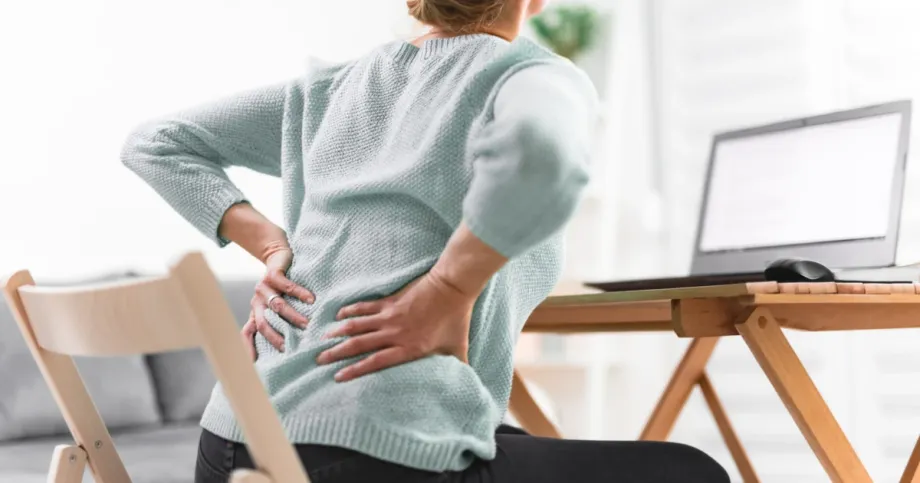
Back and neck pain can affect anyone, but women may experience spine pain differently depending on factors such as hormones, pregnancy, pelvic anatomy, posture, activity levels, and life stage.
During a recent OrthoCarolina webinar, Dr. Lazeski, an OrthoCarolina Physiatrist, discussed how these factors can influence women's spine health and why treatment may need to be tailored to the individual.
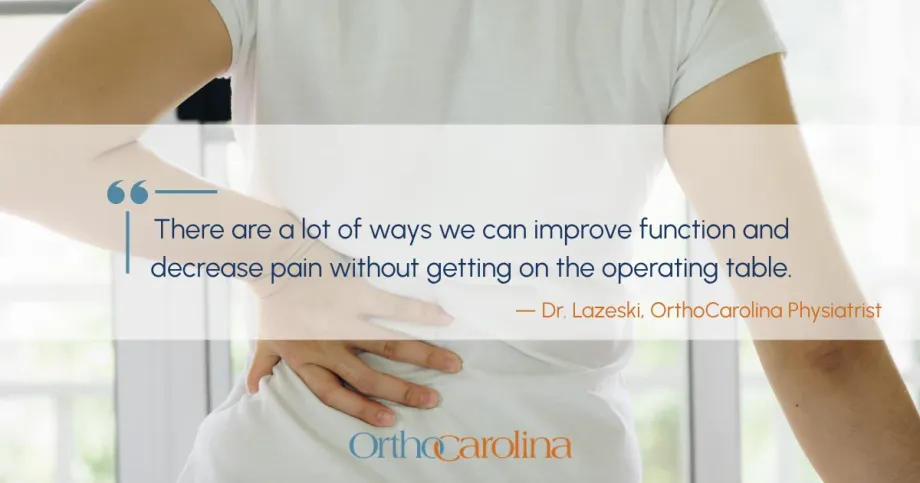
The good news? Back or neck pain does not automatically mean surgery is necessary. In many cases, non-surgical care can help reduce pain, improve function, and keep you moving.
Why Is Women's Spine Health Different?
The basic structure of the spine is similar in women and men, but there are some important differences that can affect how the spine and surrounding muscles and joints handle stress.
As Dr. Lazeski explained, “The width of our pelvis is different which puts different strain on muscles and tendons.” Hormonal changes throughout a woman's life can also affect the musculoskeletal system and contribute to certain spine and joint problems.
These factors can become especially noticeable during major life stages, including:
- Pregnancy and postpartum: Changes in body weight, posture, hormones, and pelvic mechanics can place additional stress on the lower back and sacroiliac (SI) joints.
- Perimenopause and menopause: Changes in estrogen levels may contribute to musculoskeletal symptoms and can affect how women experience orthopedic conditions.
- Caregiving and parenting: Carrying a child on one hip, breastfeeding, lifting, and repetitive bending can put uneven stress on the neck, back, and pelvis.
- Work and daily activities: Long hours at a desk, looking down at a screen, or maintaining the same position for too long can contribute to neck, shoulder, and back pain.
How Pregnancy and Postpartum Changes Can Affect the Spine
Pregnancy can change much more than your waistline. As the body adapts to support a growing baby, the spine, pelvis, muscles, and joints can all experience new demands.
The SI joint, where the sacrum meets the pelvis, is one area that may be particularly affected. SI joint dysfunction is one of the conditions she sees frequently in women, particularly during pregnancy and after childbirth.
Postpartum recovery also takes time. Rather than expecting pain or weakness to disappear immediately, treatment may focus on gradually rebuilding strength and mobility.
“Postpartum women need to focus on it took nine months to get where they're at. It's going to take about that to recover,” she explained.
Depending on the individual's symptoms, postpartum care may include gentle exercises, physical therapy, activity modifications, and other non-surgical treatments.
Why SI Joint Pain Can Feel Like Low Back Pain
SI joint pain and lower back pain can overlap, making it difficult to know where your symptoms are coming from.
SI joint pain is often felt in the lower back or buttock area, around where the back pocket of your jeans would sit. It may become more noticeable with prolonged sitting or certain movements, including lateral movements.
Pain coming from the lower back can also be felt around the waistline, buttocks, or sometimes the thighs. Bending, twisting, standing for long periods, or sitting for extended periods may make symptoms worse.
Because several conditions can cause similar symptoms, an evaluation can help determine what is actually causing the pain.
This is particularly important when pain travels down the leg. What many people call “sciatica” can potentially originate from the spine, SI joint, or piriformis muscle. Identifying the source helps determine which treatment is most appropriate.
How Everyday Habits Can Contribute to Neck and Back Pain
For many women, spine stress can build up through everyday activities rather than one major injury.
Desk work is one example. Sitting for long periods can lead to rounded shoulders, forward head posture, and additional strain on the neck and shoulders. Parenting can create similar patterns when you repeatedly carry a child on one side.
Household tasks can also add up. Repeated bending, lifting laundry, picking up toys, or carrying items can place stress on the spine, especially when performed with poor body mechanics.
One simple strategy is to avoid staying in the same position for too long. Dr. Lazeski recommends changing positions or moving every 30 to 60 minutes. A short walk, standing for a few minutes, or simply changing your position can help keep the joints moving.
Non-Surgical Spine Care Can Support Women Through Every fLife Stage
Treatment for spine pain is not one-size-fits-all. Depending on the diagnosis and symptoms, a non-surgical treatment plan may include physical therapy, medications, activity modifications, or targeted injections.
Dr. Lazeski described core and pelvic floor strengthening as essentially creating “your own bracing system” to support the lower spine and pelvis.
Injections may also be an option for certain patients. They are generally used to help temporarily reduce inflammation and pain, particularly when symptoms are preventing someone from participating in physical therapy or other treatments. They do not correct the underlying cause of every spine condition.
For some patients with facet joint pain, radiofrequency ablation may be another treatment option. This procedure uses heat to disrupt pain signals from specific nerves. Dr. Lazeski noted that relief can last for a year or longer for some patients, although results vary.
When Should You See a Spine Specialist?
It can be tempting to push through back or neck pain, especially when work, family, caregiving, and everything else still needs to get done.
But persistent pain deserves attention.
OrthoCarolina specialists typically recommend having pain evaluated if it lasts two to four weeks without significant improvement, or sooner if symptoms are worsening. Weakness, changes in sensation, or changes in reflexes may also warrant earlier evaluation.
An appointment typically includes a discussion of your symptoms and medical history, a physical examination, and a review of imaging when appropriate. From there, your provider can help determine whether physical therapy, medication, injections, surgery, or another approach makes sense for your specific condition.
As Dr. Lazeski put it, “Just because your X-ray or MRI shows pathology doesn't mean you're doomed to surgery.”
For women balancing work, family, caregiving, and an active lifestyle, the goal is often not simply to treat pain, but to find an approach that helps you get back to the things that matter to you.
Ready to Get Your Back or Neck Pain Checked Out?
You don't have to wait for pain to become a long-term problem. OrthoCarolina spine specialists can help identify what's causing your symptoms and talk through treatment options that fit your needs and goals.
Book an appointment online with OrthoCarolina today in just a few minutes!
Frequently Asked Questions
Is back pain more common in women?
Certain spine and musculoskeletal conditions may be more common or present differently in women because of factors such as pelvic anatomy, hormonal changes, pregnancy, and postpartum changes. An evaluation can help identify the specific cause of your symptoms.
Can pregnancy cause back or SI joint pain?
Yes. Changes in the body during pregnancy can place additional stress on the lower back and SI joints. Physical therapy, activity modifications, bracing, and certain medications may be options depending on your symptoms and stage of pregnancy. Some treatments, including X-ray-guided injections, may not be appropriate during pregnancy.
Does back pain mean I need surgery?
Not necessarily. Many spine conditions can be managed with non-surgical treatments such as physical therapy, medications, activity modifications, and targeted injections. Your treatment plan depends on your symptoms, physical examination, imaging, and how you respond to initial treatment.
Back