



Finding out that your child has scoliosis can bring up a lot of questions, especially when treatment is discussed. Does your child need a brace? Could a brace prevent the curve from getting worse? When is surgery considered? And what happens if the curve continues to progress?
There is no single treatment that is right for every child with scoliosis. Treatment decisions depend on factors such as the child's age, growth remaining, the size and location of the spinal curve, and whether the curve is changing over time.
For families navigating pediatric scoliosis, understanding the difference between bracing and surgery can make conversations with your child's care team a little easier.
What Is Pediatric Scoliosis?
Scoliosis is a sideways curvature of the spine that can also involve rotation of the vertebrae. It is commonly identified during childhood or adolescence, often while a child is still growing.
The goal of treatment is generally to manage the curve while considering the child's growth, overall health, and long-term function.
Some curves are monitored without active treatment. Others may require bracing, and certain curves may eventually require surgery.
That is why an evaluation and ongoing monitoring are important when scoliosis is identified.
When Is a Scoliosis Brace Recommended?
A scoliosis brace may be recommended for children or adolescents who are still growing and have a curve that falls within a range where bracing may help slow or prevent further progression.
A brace does not straighten the spine permanently. Instead, the goal is to help control the curve while the child continues to grow.
Bracing is most effective when it is used as recommended by the child's care team. Depending on the type of brace and the individual treatment plan, a child may be asked to wear it for a significant portion of the day.
That can be an adjustment for children and families.
Comfort, fit, school activities, sports, clothing, and adherence can all become part of the conversation. Regular follow-up appointments allow the care team to monitor the child's growth and the curve and make adjustments when needed.
Does Scoliosis Bracing Work?
Bracing can help slow or prevent progression of scoliosis in some growing children and adolescents.
The goal is not necessarily to eliminate the curve. Instead, bracing is intended to manage progression during the years when the spine is still growing.
Several factors can affect how well bracing works, including:
- The size and location of the curve
- How much growth the child has remaining
- How consistently the brace is worn
- How the curve responds over time
Because every child grows differently, monitoring is an important part of brace treatment.
When Is Scoliosis Surgery Considered?
Surgery may be considered for children with larger curves, curves that continue to progress despite nonsurgical treatment, or curves where the treating specialist believes surgical correction is appropriate.
The decision is not based on the curve measurement alone.
A pediatric spine specialist may consider the child's age, skeletal maturity, curve pattern, progression, symptoms, overall health, and other individual factors when discussing treatment options.
For families, it is important to understand that scoliosis surgery is not simply the next step after a brace "fails." Bracing and surgery serve different purposes and may be considered at different points depending on how a child's scoliosis develops.
What Does Scoliosis Surgery Involve?
Scoliosis surgery is designed to correct and stabilize the spinal curve.
One of the most common surgical approaches is spinal fusion. During the procedure, the surgeon uses instrumentation to help correct the alignment of the spine and joins selected vertebrae together so they heal into a more stable position.
Surgical techniques continue to evolve, and the approach depends on the child's specific curve and stage of growth.
Because surgery is a significant treatment, families should have an opportunity to discuss the expected benefits, potential risks, recovery, and how treatment may affect activities before making a decision with their care team.
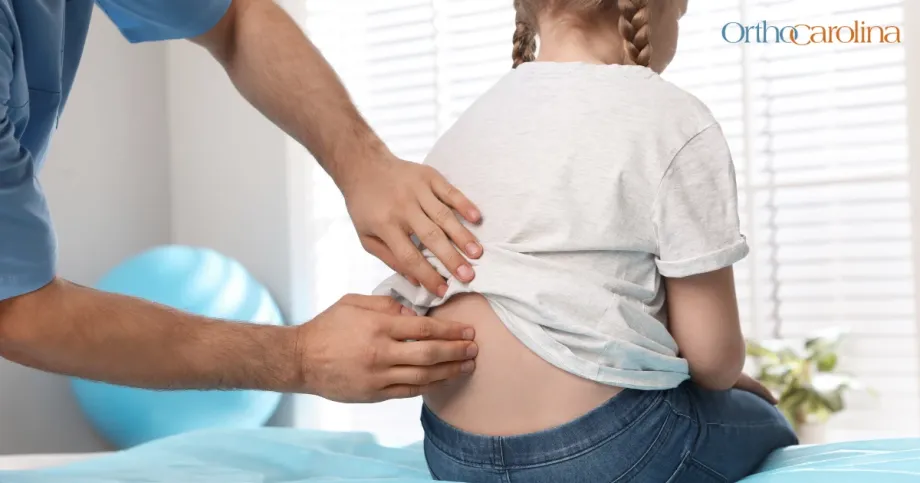
Bracing vs. Surgery: What Is the Difference?
Bracing and surgery are not interchangeable treatments.
Bracing is generally used during growth with the goal of slowing or preventing curve progression. It is nonsurgical and requires ongoing use and monitoring.
Surgery is used in situations where a more direct correction and stabilization of the spine is considered appropriate. It is a significant procedure followed by a period of recovery.
The right treatment depends on the individual child rather than simply choosing between two options.
What Happens If a Brace Doesn't Stop Scoliosis Progression?
If a child's curve continues to progress while using a brace, that does not mean the family did anything wrong.
Scoliosis can behave differently from one child to another, and some curves may continue to change despite nonsurgical treatment.
The care team may reassess the curve, the child's growth, brace use and fit, and the overall treatment plan. If the curve becomes more significant, surgery may become part of the conversation.
The earlier scoliosis is identified and monitored, the more opportunity the care team has to follow how the curve behaves during growth.
Can Kids With Scoliosis Still Play Sports?
In many cases, children with scoliosis can remain active.
Activity recommendations depend on the child's individual situation and treatment plan. A child wearing a brace may need to make temporary adjustments to certain activities, while children recovering from scoliosis surgery typically follow a gradual return-to-activity plan.
Families should talk with their child's care team about sports, physical education, strength training, and other activities rather than assuming that scoliosis automatically means giving up the activities a child enjoys.
Questions to Ask About Your Child's Scoliosis Treatment
If your child has been diagnosed with scoliosis, it can help to bring specific questions to an appointment.
Consider asking:
- How large is my child's curve?
- Is the curve changing over time?
- How much growth does my child have remaining?
- Is bracing appropriate?
- What is the goal of bracing?
- How often will the curve be monitored?
- What would indicate that a different treatment is needed?
- When would surgery be considered?
- How could treatment affect school, sports, and everyday activities?
- What should we expect during recovery?
Understanding why a particular treatment is being recommended can help families feel more prepared to participate in those decisions.
Pediatric Scoliosis Care at OrthoCarolina
A scoliosis diagnosis can feel overwhelming, but families do not have to figure out the treatment options alone.
OrthoCarolina's pediatric orthopedic specialists evaluate and treat children and adolescents with spinal conditions, including scoliosis. Treatment plans are tailored to each child's growth, curve characteristics, and individual needs.
If your child has been diagnosed with scoliosis or you have questions about bracing, monitoring, or surgical treatment, schedule a pediatric orthopedic appointment with OrthoCarolina online in just a few clicks!Frequently Asked Questions
Is a brace better than surgery for scoliosis?
Bracing and surgery are used for different situations. Bracing may help slow curve progression in some growing children, while surgery may be considered for certain larger or progressive curves. The appropriate treatment depends on the child's age, growth, curve characteristics, and progression.
At what point does scoliosis require surgery?
There is not one measurement that automatically means a child needs surgery. Pediatric spine specialists consider factors such as curve size and progression, skeletal maturity, age, overall health, and the child's individual circumstances when discussing surgical treatment.
Can scoliosis get worse after a child stops growing?
The risk of progression depends on factors including the size and type of the curve. Larger curves may continue to progress after skeletal maturity, which is one reason monitoring and appropriate treatment during growth are important.
Back