



Hip pain can make everyday activities like walking, climbing stairs, and getting out of a chair more difficult. One common cause is hip osteoarthritis, a condition that develops as the protective cartilage in the hip joint gradually wears down.
The good news is that there are several treatment options for hip arthritis. Depending on the severity of your symptoms, treatment may include medication, lifestyle changes, injections, or hip replacement surgery.
So, how do you know what's causing your hip pain, and which treatments may help?
Dr. Gregory M. Kurkis, an OrthoCarolina hip and knee specialist, explains how to identify the source of hip pain, understand hip osteoarthritis, and explore treatment options before considering surgery.
Hip Pain: What Is the Source?
Hip pain can develop in several different areas, and where you feel the pain can provide helpful clues about its underlying cause. Three common locations include the front of the hip, the side of the hip, and the back of the hip.
1. Front of the Hip and Groin Pain
Pain originating in the hip joint itself, where the ball and socket meet, most commonly presents as groin pain in the front of the hip.
This is a common pattern of pain associated with hip osteoarthritis. You may also experience pain in the front of your thigh or pain that radiates down toward your knee.
2. Lateral or Side-of-Hip Pain
Pain along the outside of the hip may indicate a problem such as bursitis or an issue involving the hip abductor tendons.
These conditions can cause discomfort around the side of the hip and may make certain activities, including walking or lying on the affected side, uncomfortable.
3. Back-of-Hip Pain
Pain in the back of the hip can sometimes originate in the hip joint, but it may also be related to the lower back or lumbar spine.
If your pain is accompanied by shooting or radiating discomfort down your leg, similar to sciatica, a lower back issue may be contributing to your symptoms.
Identifying the source of your hip pain is an important first step in determining the appropriate treatment. A thorough physical examination with an orthopedic specialist, along with X-rays of the hip and/or lower back when indicated, can help evaluate potential causes and identify structural issues.

What Is Hip Osteoarthritis?
Osteoarthritis, sometimes called "wear-and-tear arthritis," is a common condition that can develop as people age. Although it can affect any joint in the body, it frequently occurs in weight-bearing joints, including the hips.
Hip osteoarthritis can cause pain, stiffness, and reduced mobility, making everyday activities more difficult.
With hip osteoarthritis, the cartilage within the hip joint gradually wears away. As this cartilage deteriorates, it can become frayed and rough, and the protective space between the bones decreases. Over time, this may lead to bone rubbing against bone.
The body may also respond to the loss of cartilage by developing bone spurs, also called osteophytes, around the affected joint.
Hip osteoarthritis most often develops gradually, with symptoms becoming more noticeable over time. However, some people may experience a more sudden onset or worsening of symptoms.
Early evaluation can help you understand what's causing your pain and explore treatment options. A hip arthritis diagnosis does not automatically mean you need surgery. The right approach depends on your symptoms, the severity of the arthritis, your overall health, and how the condition affects your daily life.
How to Relieve Hip Pain from Arthritis
Treatment for hip arthritis generally falls into two broad categories: conservative, nonsurgical treatments and surgery, most commonly total hip replacement.
The goal of nonsurgical treatment is to help manage pain and improve function. Depending on the severity of your arthritis, these approaches may provide relief and help you remain active.
Nonsurgical Treatment Options for Hip Arthritis
1. Oral Anti-Inflammatory Medications
Oral medications may help reduce pain and inflammation associated with hip osteoarthritis.
Options may include prescription nonsteroidal anti-inflammatory drugs (NSAIDs), such as meloxicam, diclofenac (Voltaren), or celecoxib (Celebrex), as well as over-the-counter NSAIDs such as ibuprofen or naproxen.
Acetaminophen (Tylenol) may also help some people manage pain.
Not every medication is appropriate for every patient. Talk with your physician about which options may be suitable for you, particularly if you have other medical conditions or take additional medications.
2. Physical Therapy and Home Exercise
Physical therapy and home exercise programs may help strengthen the muscles surrounding the hip, improve flexibility, and support mobility.
However, the level of activity that is appropriate depends on the severity of your arthritis and your symptoms.
For people with severe hip arthritis, certain exercises may increase pain or become difficult to tolerate. If activity causes significant pain during or after exercise, discuss your symptoms with your physician or physical therapist to determine whether your program needs to be modified.
3. Weight Management and Reducing Joint Stress
Excess body weight can increase the forces placed on the hip joints during everyday activities such as walking and climbing stairs.
For patients who are overweight, weight management may help reduce stress on the hip joint and potentially improve the frequency or intensity of symptoms.
Even relatively small changes in the forces placed on the joint may make a difference in how comfortable certain activities feel.
4. Cortisone Injections
Cortisone injections may provide temporary relief for some people with mild to moderate hip osteoarthritis.
However, hip steroid injections are generally not considered a long-term solution for arthritis pain. They may be an option for patients seeking short-term symptom relief or for those who are not candidates for surgery and have exhausted other treatment options.
In some cases, a hip injection may also be used for diagnostic purposes. By helping determine whether pain is originating within the hip joint itself, an injection may provide useful information when evaluating other potential sources of discomfort.
What About Gel, PRP, or Stem Cell Injections?
Other injections, including viscosupplementation (gel) injections, platelet-rich plasma (PRP), and stem cell therapies, have also been explored as treatments for joint pain.
However, these treatments have not been shown to provide reliable benefits for hip osteoarthritis and are not routinely recommended for this condition.
Your orthopedic specialist can help explain which treatment options are supported by the available evidence and may be appropriate for your individual situation.
When Should You Consider Hip Replacement Surgery?
If nonsurgical treatments are no longer providing adequate relief, it may be time to discuss whether hip replacement surgery is an appropriate option.
Total hip replacement is a commonly performed procedure for advanced hip osteoarthritis. When appropriately indicated, it can help relieve pain and improve function for many patients.
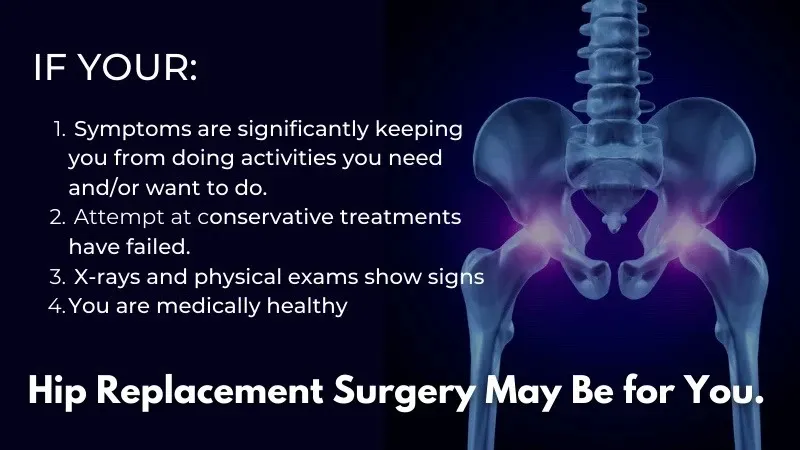
When counseling patients about hip replacement, there are four important considerations:
1. Your Symptoms Significantly Affect Daily Life
Pain, stiffness, or limited mobility may indicate that it is time to discuss surgical treatment when symptoms consistently interfere with activities you need or want to do.
This may include difficulty walking, climbing stairs, getting dressed, or participating in activities you enjoy.
2. Conservative Treatments Have Not Provided Adequate Relief
Before considering surgery, patients typically explore appropriate nonsurgical treatments, which may include oral medications, physical therapy or exercises, and steroid injections.
If these approaches no longer provide sufficient relief, your orthopedic specialist can help you evaluate the next steps.
3. Your Examination and X-Rays Support the Diagnosis
A physical examination and imaging, including X-rays, can help determine whether the hip joint is the source of your symptoms and whether advanced osteoarthritis is present.
These findings are important when evaluating whether hip replacement may be appropriate.
4. You Are Medically Prepared for Surgery
Your overall health is another important consideration.
Your surgical team will evaluate your medical history, current health, and any factors that may need to be addressed before proceeding with total hip replacement.
The decision to have surgery is ultimately a shared discussion between you and your orthopedic team. Your symptoms, goals, medical circumstances, and treatment preferences all matter.
Find Relief from Hip Arthritis Pain with OrthoCarolina
If hip arthritis is making it difficult to stay active or enjoy your everyday routine, you don't have to navigate your treatment options alone.
An orthopedic specialist can help identify the source of your hip pain, evaluate the severity of your arthritis, and discuss treatment options based on your symptoms and goals.
If conservative treatments have not provided adequate relief, a specialist can also help you understand whether total hip replacement may be an appropriate next step.
When you're ready to discuss your options, schedule an appointment easily online with an OrthoCarolina hip specialist. You can also request an evaluation directly with Dr. Gregory M. Kurkis, the orthopedic expert for this article, in Huntersville, NC.

Frequently Asked Questions
What does hip arthritis pain feel like?
Hip arthritis commonly causes pain in the groin or front of the hip, although discomfort may also extend into the thigh or knee. Other symptoms can include stiffness, reduced range of motion, and difficulty with everyday activities. Symptoms vary depending on the severity of the condition.
Can hip arthritis be treated without surgery?
Yes. Depending on the severity of the arthritis, nonsurgical treatments may include anti-inflammatory medications, physical therapy, appropriate exercise, weight management, and cortisone injections. These approaches may help manage symptoms, although they cannot restore cartilage that has already been lost.
How do I know when I need a hip replacement?
Hip replacement may be worth discussing when hip pain and stiffness significantly interfere with daily activities, nonsurgical treatments have not provided adequate relief, and an examination and X-rays indicate advanced hip osteoarthritis. Your orthopedic specialist can help determine whether surgery is appropriate based on your symptoms, medical health, and individual goals.
This article was originally published in 2022 and was last updated in October 2026.
Back